Aqara Wireless Mini Switch
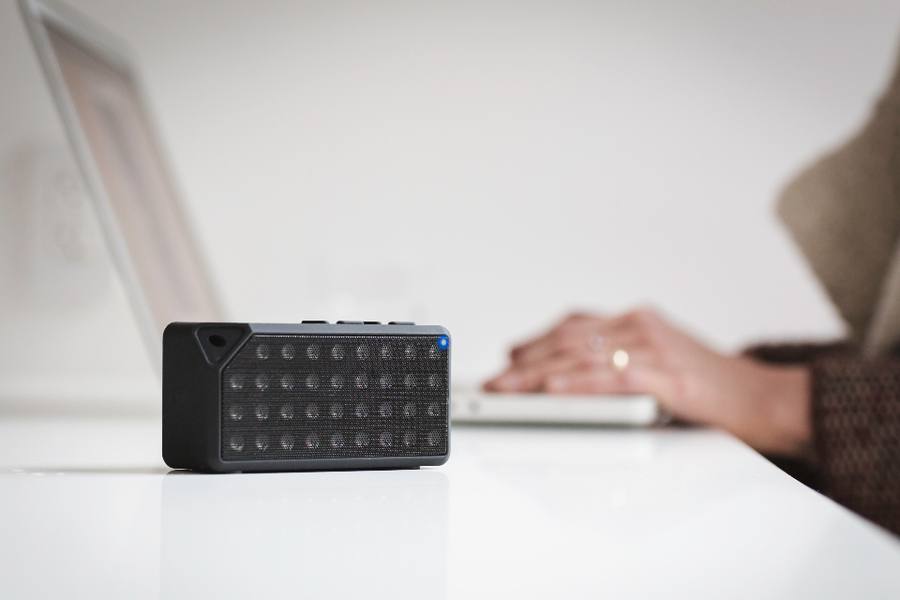
Image illustrative (photo de stock) ; ce n'est pas le produit exact.
The Cheapest Fix For The Biggest Problem
The main reason households reject smart homes is that controlling anything needs a phone. A physical button anybody can press solves that for very little money.
This is a battery-powered button that sends a signal to the hub, which then does whatever you configured. It is not wired to anything and controls nothing directly, which is precisely what makes it flexible.
For the price of one smart bulb you can put buttons in four rooms, and the difference that makes to whether a household actually uses its smart home is out of all proportion to the cost.
Mountable Anywhere
Because it needs no wiring it goes wherever a button is useful rather than wherever a switch happens to be: beside a bed, inside a cupboard, on the side of a desk, by a sofa, next to a door.
That freedom is the underrated part. The positions where a control is genuinely useful are rarely the positions electricians chose decades ago, and this removes that constraint entirely.
It mounts with adhesive or sits loose, and a loose one beside a bed works perfectly well. Some people keep one in a pocket, which is a legitimate use.
Single, Double And Long Press
It distinguishes single press, double press and long press, which means one button can do three things — lights on, lights dim, everything off.
That multiplies its usefulness considerably. A bedside button that turns the lamp on with one press, dims the whole room with two, and switches off the entire downstairs with a long press covers most of what a bedside control needs to do.
Configuring three actions rather than one is worth the five minutes, and it is the step people skip and then wish they had not.
Battery, Protocol And Practicalities
It runs for years on a coin cell because it only transmits when pressed, which makes it genuinely fit-and-forget.
It needs a hub, and response speed depends on whether the hub processes locally. On a local hub the light comes on immediately; on a cloud-routed one there is a delay that makes a physical button feel worse than a wall switch, which defeats the purpose.
It is small, which is mostly good and means it can be hard to find in the dark if it is loose rather than mounted. Mounting it somewhere findable by feel matters more than it sounds.
Who It Suits
This suits every smart home, without much qualification. Any house where automations exist but only one person can trigger them needs several of these.
It suits less well somebody with no hub, or with a cloud-routed hub where the delay makes a button unsatisfying.
It suits particularly well households with children, elderly relatives or frequent guests — anybody who will not be installing an app and should not have to.
The Verdict
The highest-value smart home accessory there is: a button anybody can press, mountable anywhere, three actions each, years of battery life, for very little money.
It needs a hub, and needs a locally processing one to feel good, and a loose one is easy to lose in the dark.
Buy several, configure all three press actions on each, and mount them where a control is actually useful rather than where a switch already is.
En un coup d'œil
Avantages
- Physical control anybody can use without a phone
- Mounts anywhere with no wiring at all
- Single, double and long press give three actions per button
- Years of battery life; genuinely fit and forget
Inconvénients
- Requires a hub
- Feels poor on a cloud-routed hub because of the delay
- Small enough to lose if left loose
- Controls nothing directly; everything via automations
Questions fréquemment posées
Why is a button so useful?
Because the main reason households reject smart homes is that control needs a phone. A button anybody can press fixes that for the price of a bulb, and four buttons in four rooms changes whether the system gets used at all.
What can one button do?
Three things — single, double and long press. A bedside one might turn the lamp on, dim the room, and switch off the whole downstairs. Configuring all three takes five minutes and is the step people skip and regret.
Does hub choice matter?
A lot. On a locally processing hub the light comes on immediately. On a cloud-routed hub there is a delay that makes a physical button feel worse than a wall switch, which defeats the entire point of having one.
Spécifications
| Type | Battery wireless button |
| Wiring | None |
| Actions | Single, double and long press |
| Battery | Coin cell, multi-year |
| Hub | Required |
| Response | Immediate on a local hub |
| Mounting | Adhesive or loose |
| Direct control | None; via automations |
Résumé
The highest-value smart home accessory there is. Buy several, configure all three presses, and mount them where a control is actually wanted.
Vérifier le prix sur Amazon