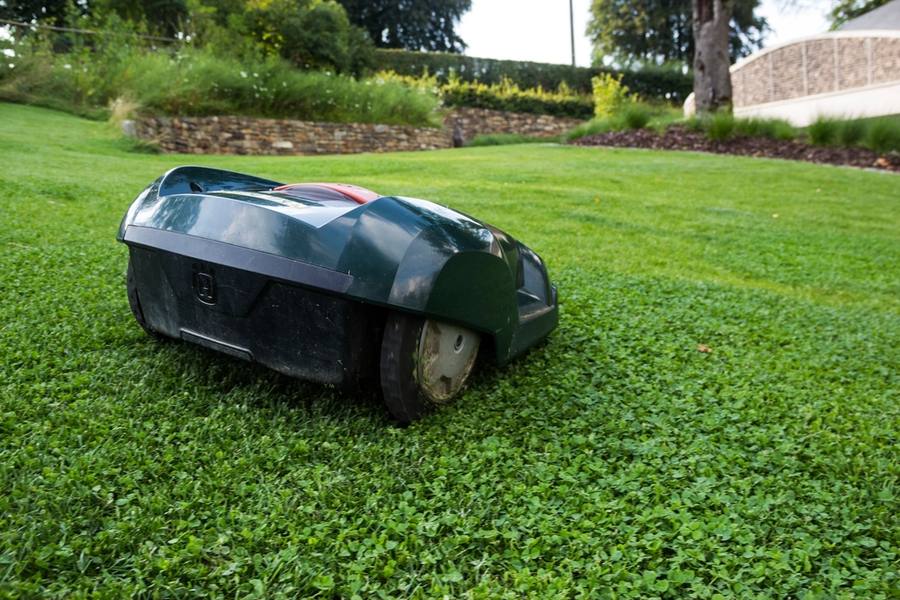
Representative image (stock photo); not the exact product.
Overlapping Passes Rather Than One
Most robots clean in parallel lines with a single pass, which on carpet leaves a meaningful amount behind because one pass of a brush does not lift embedded dust.
Shark's approach cleans in an overlapping grid, covering the same area from multiple directions. That takes considerably longer and removes more, particularly from carpet where direction matters.
The trade is time. A clean that takes twice as long is not a problem for a robot running while the house is empty, which is when most people run them, so the trade is largely free.
Self-Emptying Base, No Pad Washing
The base empties the dust bin, which is the single most important dock function and the difference between emptying every two days and every few weeks.
It does not wash or dry the mop pads, which means the mop pad is a hand-washing job after mopping runs. That is the honest limitation and it is where the price difference against premium machines sits.
For a household that vacuums with the robot daily and mops occasionally, that is a reasonable arrangement. For daily mopping it becomes the chore the robot was meant to remove.
Mopping As A Secondary Function
Mopping here is a genuine secondary function rather than a co-equal one: a damp pad for light maintenance on hard floors rather than the pressurised spinning pads of mop-focused machines.
It refreshes a hard floor and it is not the reason to buy this machine. The vacuum performance, particularly on carpet, is.
Being clear about that avoids the common disappointment of expecting mopping parity with machines designed around mopping, which this is not.
The practical way to use it is to run the vacuum function daily and attach the mop pad deliberately when a hard floor needs refreshing, perhaps once or twice a week. Under that pattern hand-washing a pad is a minor task rather than a daily chore, and the machine plays to what it is genuinely good at. Buying it and then attempting daily mopping is the mismatch that produces the complaints.
Carpet Performance And Practicalities
Carpet is where this does better than most mop-focused robots, because the overlapping pattern and brush design are oriented towards lifting from pile rather than wiping hard floors.
A house with substantial carpet is genuinely better served by this than by a mop-focused premium machine whose carpet performance is an afterthought.
Navigation and mapping are good rather than class-leading, obstacle avoidance is basic, and cleaning runs take noticeably longer because of the overlapping pattern.
Who It Suits
This suits a carpeted or mixed home where vacuum performance matters most and mopping is an occasional extra rather than a daily requirement.
It suits less well a hard-floor home wanting daily mopping, where hand-washing the pad defeats the purpose and a mop-focused machine with a washing dock is correct.
It suits particularly well households running the robot while out, since the longer overlapping clean costs nothing when nobody is waiting for it to finish.
The Verdict
A vacuum-first robot that does carpet better than the mop-focused premium machines, with a self-emptying base covering the most important dock function.
It does not wash the mop pads, mopping is a secondary function, obstacle avoidance is basic, and runs take longer.
Buy this for carpet and vacuuming with occasional mopping. For daily mopping on hard floors, a machine with a pad-washing dock is the right purchase instead.
At a glance
Pros
- Overlapping grid pattern lifts more, especially from carpet
- Self-emptying base covers the most important dock function
- Better carpet performance than mop-focused premium robots
- Longer runs cost nothing when running while out
Cons
- Does not wash or dry the mop pads; hand washing required
- Mopping is a secondary function, not pressurised
- Obstacle avoidance is basic
- Cleaning runs take noticeably longer
Frequently asked questions
Why does an overlapping pattern matter?
Because one pass of a brush does not lift embedded dust from carpet, and direction matters on pile. Covering the same area from multiple directions removes more. It takes twice as long, which costs nothing if the robot runs while you are out.
Does it wash the mop pad?
No — the base empties the dust bin but pad washing is a hand job. Fine if you vacuum daily and mop occasionally; not fine if you want daily mopping, where a pad-washing dock is what you actually need.
Is it good for hard floors?
For vacuuming, yes. For mopping, it is light maintenance with a damp pad rather than the pressurised spinning pads of mop-focused machines. Buy this for carpet performance, not for mopping parity.
Specifications
| Type | Vacuum-first robot with mopping |
| Pattern | Overlapping grid, multiple directions |
| Base | Self-emptying dust bin |
| Pad washing | None; hand wash |
| Carpet | Strong for the category |
| Mopping | Light maintenance |
| Obstacle avoidance | Basic |
| Run time | Longer than single-pass robots |
The bottom line
Better on carpet than the mop-focused premium robots, with a self-emptying base. It does not wash the mop pad, so mop occasionally rather than daily.
Check Price on Amazon